Review shared subscriptions without confusing access and agreement
A household subscription can continue renewing long after both adults stop using it. This exercise creates a small shared record of service, payer, renewal and actual use. It addresses communication and practical follow-through rather than recommending a financial product or a universal way to divide expenses.
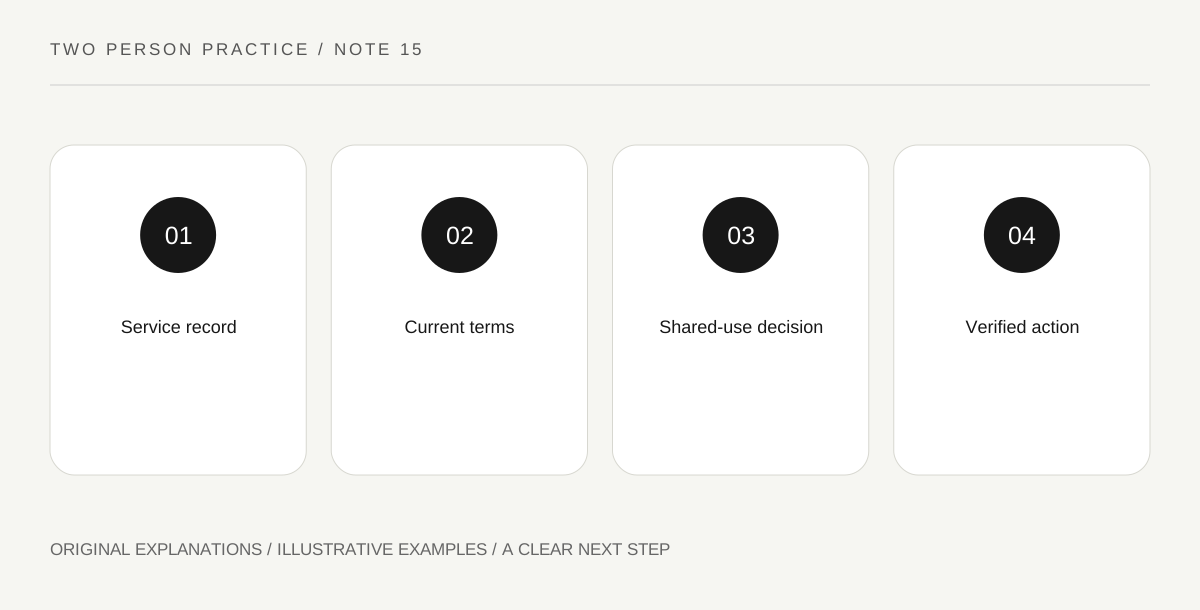
Original explanatory diagram. Read the full method and limitations below.
List the actual service and payer
Begin with one recurring subscription rather than every household expense. Record the account holder, who pays and who uses it. Do not equate having access with agreeing to pay indefinitely. A service may have started as one person’s choice and later become shared by habit. The record should describe the present arrangement without implying that one adult gains control over the other’s personal accounts.
Read the current terms directly
Check the service’s official account information for renewal timing, price and cancellation process. These details can change, so do not rely on an old screenshot or this article for current terms. Keep the relevant confirmation or record through an appropriate private method. The FTC’s consumer guidance supports reading subscription conditions and monitoring renewal information; this original worksheet uses those facts as the practical background for a relationship conversation.
Ask whether the shared use still exists
One person may use the service weekly while the other has stopped. Discuss whether it remains a shared expense, becomes personal or should be ended under the actual terms. Avoid treating cancellation as a statement that the other person’s hobby is unimportant. The question is which arrangement both adults currently agree to, given actual use and cost. Neither should be enrolled into a new recurring commitment through silence or a forgotten trial.
Assign the follow-through and verify it
If the decision is to cancel or change the service, state who will take the action and how completion will be checked. A conversation about canceling is not the same as a completed cancellation. If access changes, communicate that before the other person unexpectedly loses a service they were relying on. Record the next renewal or review only if it remains useful. The goal is a clear living agreement, not another complicated ledger that nobody maintains.
Illustrative worked example
Illustrative review: A fictional music service renews monthly under one adult’s account. Both once used it, but now only the account holder does. They agree it will become a personal expense at the next cycle, subject to the actual service terms. Another unused shared trial is assigned to one person for cancellation, and they check the official confirmation. The example uses no current price or legal entitlement claim.
Questions that come up
Must shared subscriptions be split equally?
No universal split fits every household. Choose an arrangement both freely understand and accept, then revisit it when use changes.
Does removing an app cancel the subscription?
Do not assume it does. Follow the actual service’s official cancellation instructions and check the resulting account status or confirmation.
References and scope
These sources support the factual background. Examples and exercises are original illustrative teaching material. References do not imply endorsement.
- FTC: Trials and auto-renewing subscriptions — Reading subscription terms and monitoring renewals and cancellation information.
- love is respect: Healthy Relationships — Mutual respect, equality and independent choice as boundaries for relationship education.