Set the boundaries of a surprise gift before choosing the object
A surprise can concern the exact object while the practical conditions are already understood. This exercise helps adults discuss space, cost expectations and unwanted categories without requiring a detailed wish list. The aim is a gift that can be received freely rather than a hidden obligation.
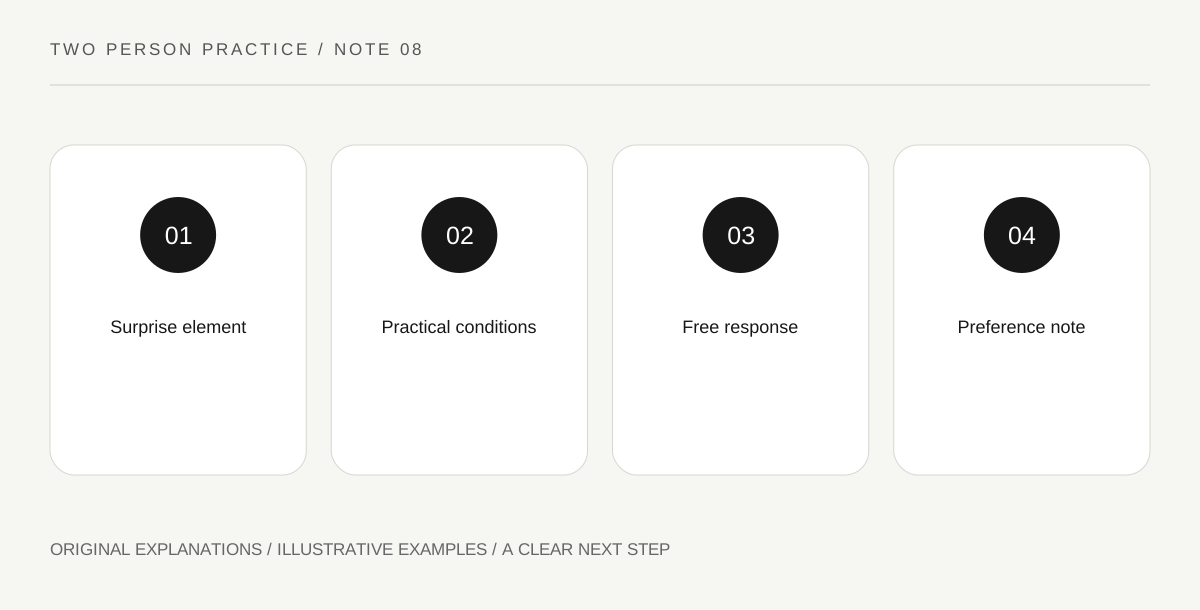
Original explanatory diagram. Read the full method and limitations below.
Separate surprise from uncertainty
You can keep the exact book or outing secret while asking whether that category would be welcome. A large object, live animal or expensive recurring commitment creates practical consequences beyond the moment of giving. Identify those consequences before treating secrecy as the most important feature. The exercise does not require eliminating spontaneity; it asks which parts of the decision affect the recipient’s space, time or responsibility enough to discuss first.
Name a few useful conditions
Ask about categories to avoid, storage limits and whether experiences or objects are preferred this time. If money expectations matter, discuss a comfortable range without turning the gift into a competition. These are personal choices, not universal rules about what a romantic partner should spend. A clear condition such as no large household objects can leave many possible surprises while protecting the recipient from a practical burden they did not choose. Keep the agreed category separate from the still-secret exact choice.
Keep the recipient’s response voluntary
A gift does not purchase affection, public praise or a matching expense. Let the recipient decide how to use an object and whether a planned experience fits their actual availability. If a return or exchange may be needed, preserve the relevant information where appropriate. Do not frame a different preference as evidence that they failed the surprise. The giver’s intention and the recipient’s experience can both matter without one canceling the other.
Review what was learned for next time
After the occasion, ask a specific practical question if useful: Was the outing length comfortable? Did the object fit your space? Avoid demanding an emotional performance or repeated reassurance. Keep the information as a preference note rather than a scorecard of gratitude. The original worksheet succeeds when the next gift can preserve delight while making fewer assumptions about the other adult’s obligations, possessions and tastes.
Illustrative worked example
Illustrative agreement: One partner likes surprises but has little storage space. Before a birthday, they say that a small consumable item or a short experience would be welcome, while large decorative objects would not. The giver keeps the exact choice secret and selects a brief workshop only after checking availability. The surprise remains the activity’s identity, while the time commitment and category have been freely discussed.
Questions that come up
Does asking about a category ruin a surprise?
Not necessarily. The exact choice can remain unknown while important practical conditions are clear.
Should an unwanted gift be kept forever to prove appreciation?
No universal rule requires that. Discuss the object and any practical return options respectfully, without treating continued possession as the only possible sign of care.
References and scope
These sources support the factual background. Examples and exercises are original illustrative teaching material. References do not imply endorsement.
- love is respect: Healthy Relationships — Mutual respect, equality and independent choice as boundaries for relationship education.