Treat adopting a pet as a shared responsibility decision
A pet changes a household beyond the excitement of choosing an animal. This exercise helps two adults discuss daily care, long-term responsibility and whether both freely want the commitment. It should precede an adoption decision rather than serve as a surprise announcement after one person has already acted.
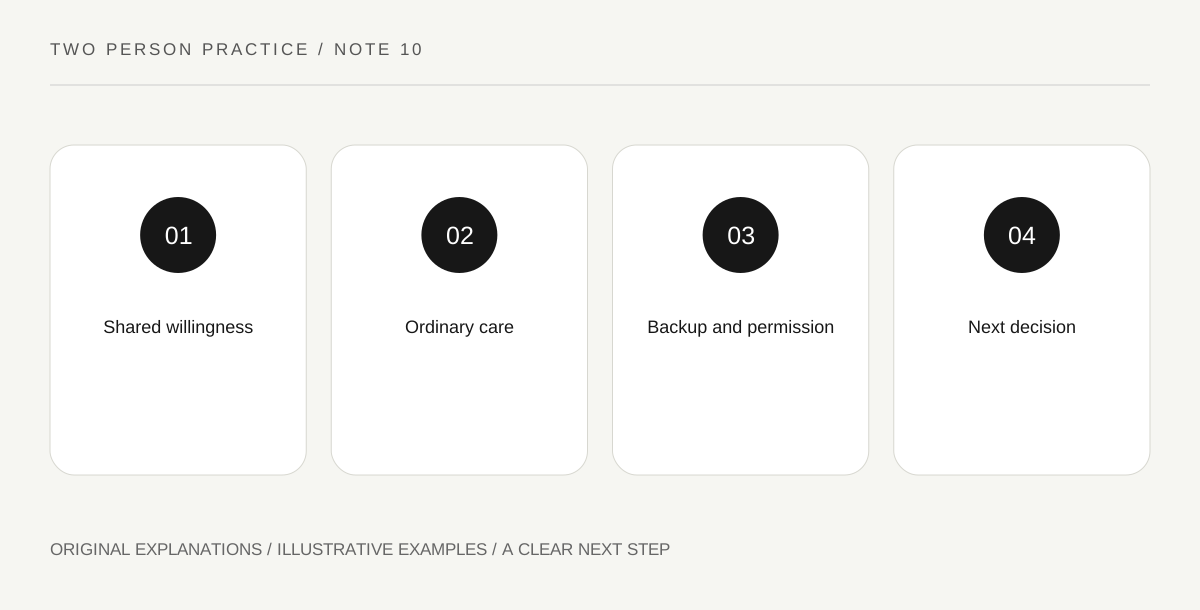
Original explanatory diagram. Read the full method and limitations below.
Ask whether the commitment is wanted
Each adult should be able to say yes, no or not now without being accused of rejecting the relationship. A shared home does not make one person’s enthusiasm a substitute for the other’s agreement. Discuss the kind of animal and relevant household suitability with appropriate adoption guidance. The exercise does not recommend a species or assume that affection alone establishes a suitable home.
Describe an ordinary care day
List the actual tasks for the animal being considered, using reliable species-specific guidance and advice from the responsible organization or professional. Include routine care, cleaning, exercise where applicable and arranging appropriate veterinary care. Do not make one vague promise to help. Ask who would notice needs, obtain supplies and manage appointments. A practical day is more informative than imagining only holidays, photographs and enjoyable play.
Consider absences and changed circumstances
Discuss work travel, illness, moving and other foreseeable changes without pretending that every future event can be predicted. Identify who can provide suitable care if the usual person is unavailable. Any housing permission and relevant local requirements need direct verification for the actual home. Do not rely on a relationship worksheet to establish legal permission, animal suitability or medical care. The planning task should reveal what still needs reliable information before a decision.
Make the next step proportional to readiness
If both want to continue, the next action might be speaking with an adoption organization and learning about a suitable animal’s needs. If responsibilities remain unclear, pause the adoption decision. An agreed no or not now is a complete outcome. Record who will gather which information and avoid using the research stage as a disguised promise to adopt. A living animal’s care should not become a test of how much one partner loves the other.
Illustrative worked example
Illustrative decision: One adult wants to adopt a dog, while the other is uncertain about weekday care. They write an ordinary workday, including the times both are away, and identify a gap. They seek appropriate adoption guidance and verify their housing situation before deciding anything. The exercise ends with further questions rather than an animal arriving as a surprise. Neither person’s hesitation is treated as a failure of affection.
Questions that come up
Is a pet a suitable surprise gift for a partner?
A living animal creates ongoing responsibilities that need prior informed agreement. Keep the commitment decision separate from the wish to create a surprise.
What if one person promises to do all the care?
Discuss the effect on the whole household and realistic backup arrangements. A promise does not remove the other adult’s right to decline the proposed household change.
References and scope
These sources support the factual background. Examples and exercises are original illustrative teaching material. References do not imply endorsement.
- ASPCA Adoption Tips — Pet adoption as a responsibility and suitability decision.
- love is respect: Healthy Relationships — Mutual respect, equality and independent choice as boundaries for relationship education.