Agree on an overnight guest plan before sending the invitation
An overnight invitation affects sleeping space, ordinary routines and the work of hosting. This exercise helps two adults discuss those practical effects before a guest receives a promise. The aim is a clear invitation that both household members can support freely.
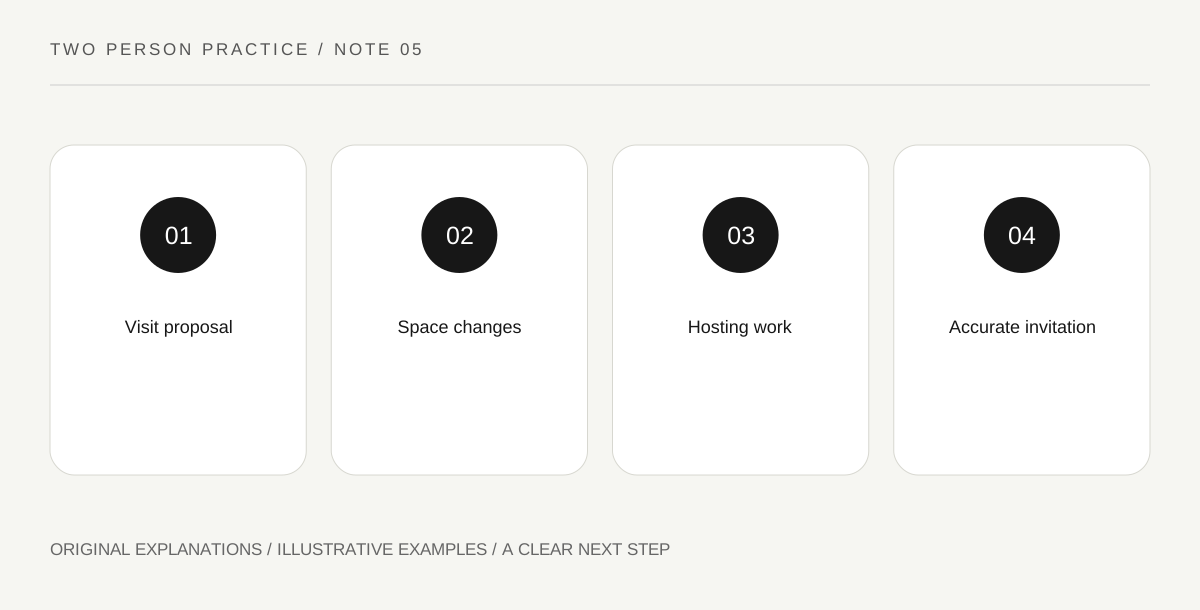
Original explanatory diagram. Read the full method and limitations below.
Describe the actual visit
Name who might stay, how many nights and what space would be used. A vague friend may visit sometime does not communicate the same request as a named two-night stay next weekend. Include any practical uncertainty without presenting it as already decided. The invitation should remain a proposal until the people affected have had a genuine chance to discuss it, especially when the sleeping arrangement uses shared space.
List the changes to ordinary use
Consider where people sleep, how bathrooms and work areas remain usable, and what preparation is needed. These are planning questions rather than a judgment about whether the guest is likable. One partner can enjoy a visitor and still find a particular week impractical. Keep the discussion on the proposed visit, not a general accusation that one person dislikes the other’s friends or family.
Assign hosting work explicitly
Clarify who communicates arrival details, prepares the space, handles meals if offered and restores the room afterward. Do not assume the inviting person only makes the social invitation while the other becomes the default host manager. Equally, allow either person to offer particular help voluntarily. The division should reflect actual capacity and agreement. A list that includes cleanup makes the visit’s full footprint visible rather than ending the plan when the guest arrives.
Write the invitation within the agreement
If both adults agree to two nights, do not casually extend the stay without another conversation. State the practical boundaries clearly and kindly to the guest, including the arrival window and any important household information. If the proposal does not work, choose another arrangement or decline the stay. A guest plan succeeds when the invitation matches what the household can actually offer, not when one adult reluctantly absorbs unspoken work to preserve appearances. Include who will communicate any later date change.
Illustrative worked example
Illustrative plan: Ren proposes a two-night visit from a friend. The shared study would become the sleeping area, but Casey has an early work call there on Monday. They agree on a Friday-to-Sunday stay instead. Ren handles the invitation, bedding and final room reset, while Casey offers one shared dinner. The guest receives the agreed dates before booking travel, and no extension is assumed from a casual conversation.
Questions that come up
Does declining an overnight stay reject the person?
Not necessarily. The household may be unable to offer the proposed space or dates. Separate the practical arrangement from assumptions about affection.
Who should tell the guest about a change?
Agree who owns that communication, usually the person who made or proposed the invitation. The important point is that someone clearly handles it.
References and scope
These sources support the factual background. Examples and exercises are original illustrative teaching material. References do not imply endorsement.
- Gottman Institute: Making the Invisible Visible — Context for noticing planning and organizing work within shared household responsibilities.
- Gottman Institute: Questions before moving in together — Context for explicit discussion of cohabitation routines and expectations; exercises here are original.
- love is respect: Healthy Relationships — Mutual respect, equality and independent choice as boundaries for relationship education.