Share a kitchen while keeping different food preferences visible
Two adults can share meals without wanting identical food every day. This planning exercise separates a shared base, personal additions and practical kitchen work. It addresses preference and routine; allergies, medical diets and food-safety requirements need their own appropriate guidance.
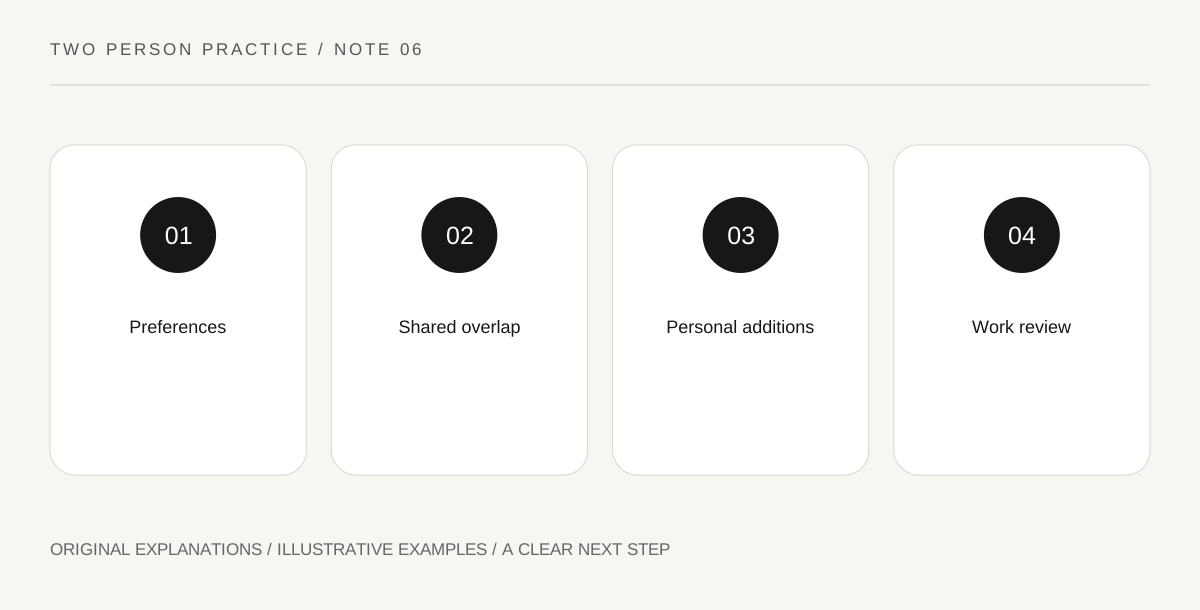
Original explanatory diagram. Read the full method and limitations below.
Name the difference without turning it into a contest
One person may prefer a warm breakfast while another wants something quick and cold. Describe the actual meal and routine rather than labeling one eater disciplined and the other difficult. Ask which differences affect shared preparation and which do not. Two separate breakfasts may be perfectly workable. The goal is not to prove that eating the same food is a measure of affection or a requirement for a successful household.
Choose where sharing is useful
A common dinner base with different toppings can reduce duplication if both enjoy it. Alternatively, sharing only some meals may better fit schedules and preferences. Write the specific overlap, such as two dinners this week, instead of promising that every meal will now be shared. Keep each person’s ability to choose their food intact. This original exercise does not prescribe a diet or suggest that one partner should manage another adult’s eating. Write the two shared dinners on the actual weekly plan.
Divide the kitchen work around the plan
Agree who checks supplies, prepares the shared component and handles the cleanup associated with it. If personal additions create extra work, discuss how that work is handled without treating individual preference as a moral failure. Keep necessary labels and storage distinctions understandable. Medical restrictions or allergies should not be reduced to a casual preference worksheet; obtain the relevant professional and food-safety information when those issues apply.
Review the arrangement with actual evenings in mind
After the planned meals, ask whether the shared base was enjoyable and whether the preparation burden was reasonable. If one person routinely cooks two complete meals while the other expects a simple shared dinner, revise the arrangement. A clear two-meal overlap may work better than an ambitious plan that creates resentment. Record what is shared, what remains individual and the work each adult freely agreed to do.
Illustrative worked example
Illustrative week: One adult enjoys beans, and the other prefers an additional familiar protein. They agree on a shared vegetable-and-grain base for two dinners, with each responsible for their chosen addition. One checks the base ingredients; the other handles the shared cleanup. Afterward, they find one dinner enjoyable and one too complicated, so they simplify the second. No calorie target, treatment diet or claim about ideal nutrition is attached to the example.
Questions that come up
Must partners eat together every night?
No. Choose a routine that fits both people. Shared meals can be meaningful without becoming an obligation at every meal.
Can this worksheet handle an allergy?
It can help discuss logistics, but it does not establish safe ingredients, preparation or medical care. Use appropriate specific guidance for those requirements.
References and scope
These sources support the factual background. Examples and exercises are original illustrative teaching material. References do not imply endorsement.
- Gottman Institute: Making the Invisible Visible — Context for noticing planning and organizing work within shared household responsibilities.
- Gottman Institute: Questions before moving in together — Context for explicit discussion of cohabitation routines and expectations; exercises here are original.
- love is respect: Healthy Relationships — Mutual respect, equality and independent choice as boundaries for relationship education.