Merge belongings without treating one home as the default
Moving in together can turn ordinary objects into decisions about belonging. This exercise separates practical duplication, personal meaning and the use of shared space. It gives each adult room to explain an object before deciding what should move, remain stored or leave the household.
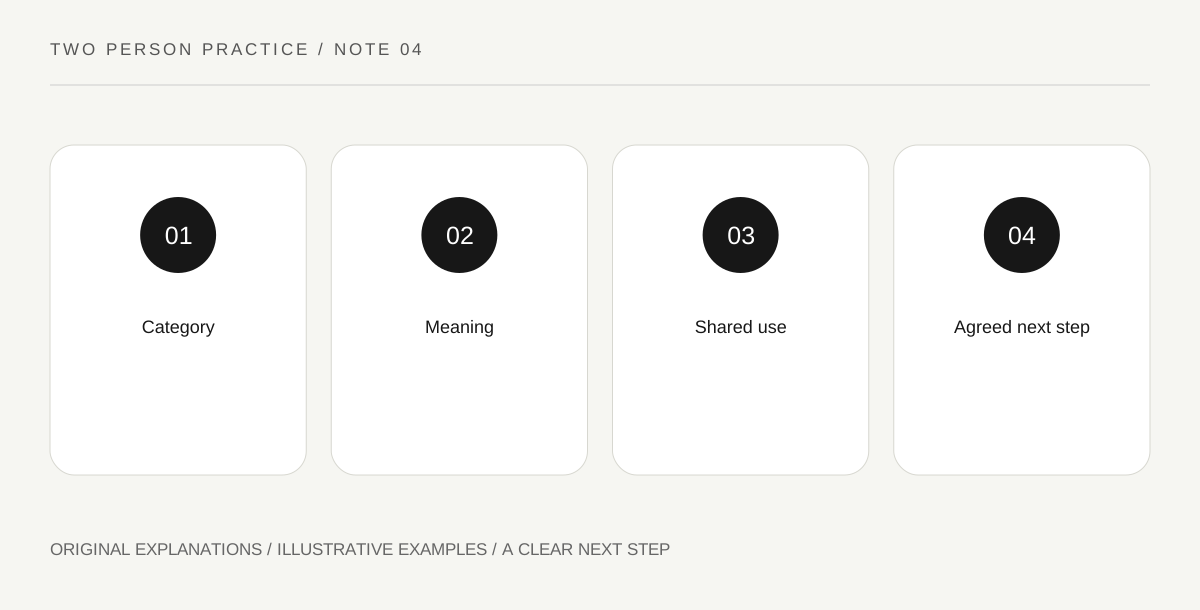
Original explanatory diagram. Read the full method and limitations below.
Choose one category rather than every possession
Begin with mugs, chairs or another manageable group. List what each person owns without immediately labeling one collection better. A category small enough to inspect allows a real decision instead of a rushed argument over an entire home. Include the available space and actual use. The person whose furniture is already in the room should not automatically receive permanent priority merely because moving the other collection requires more effort.
Ask what the object carries
A plain mug may be a replaceable duplicate, a gift from someone important or simply the shape a person enjoys using. Ask rather than assigning meaning from price or appearance. Personal significance does not require the other adult to love the same object, but it deserves an accurate hearing. Keep the explanation specific. An object can matter without becoming a referendum on whether the relationship respects every part of a person’s history.
Separate shared-use and personal decisions
Both people can discuss which items serve the shared space. Ownership and permission still matter when something is sold, donated or discarded. Do not remove another person’s belongings as a surprise cleanup. If space is limited, identify a practical option such as a smaller shared set and a personal storage area, provided both agree. The aim is a clear arrangement rather than forcing sentimental objects to compete in a winner-takes-all vote.
Use a review date for uncertain choices
Some decisions can remain provisional if that is workable. Put an item in agreed storage and revisit whether it is missed or useful after a stated period. A review date should not become permission for one person to dispose of it silently. Record who owns the item and what action still needs agreement. The exercise ends when the next step is understood, even if not every object has reached its final place.
Illustrative worked example
Illustrative category: Two adults combine twelve everyday mugs, including several with personal meaning. They choose six for the shared shelf, keep each person’s meaningful mug available and place agreed duplicates in a labeled box for later review. Neither donates the other’s property without permission. The decision uses actual shelf space and preference, rather than assuming the existing household’s collection is the standard the incoming person must fit around.
Questions that come up
Must sentimental objects always stay on display?
No. Meaning, storage and display are separate questions. Discuss a workable arrangement without dismissing the object or assuming display is the only form of respect.
Does provisional storage mean automatic donation later?
No. State the review process explicitly. A future date is a chance to decide together, not silent authorization to remove someone else’s belongings.
References and scope
These sources support the factual background. Examples and exercises are original illustrative teaching material. References do not imply endorsement.
- Gottman Institute: Questions before moving in together — Context for explicit discussion of cohabitation routines and expectations; exercises here are original.
- love is respect: Healthy Relationships — Mutual respect, equality and independent choice as boundaries for relationship education.