Create a small tradition that belongs to the present relationship
A shared tradition does not need a holiday, large budget or perfect history. This exercise starts with a small repeated activity that both adults want to keep. It distinguishes the meaning of the ritual from the exact performance, so the tradition can adapt when ordinary life changes.
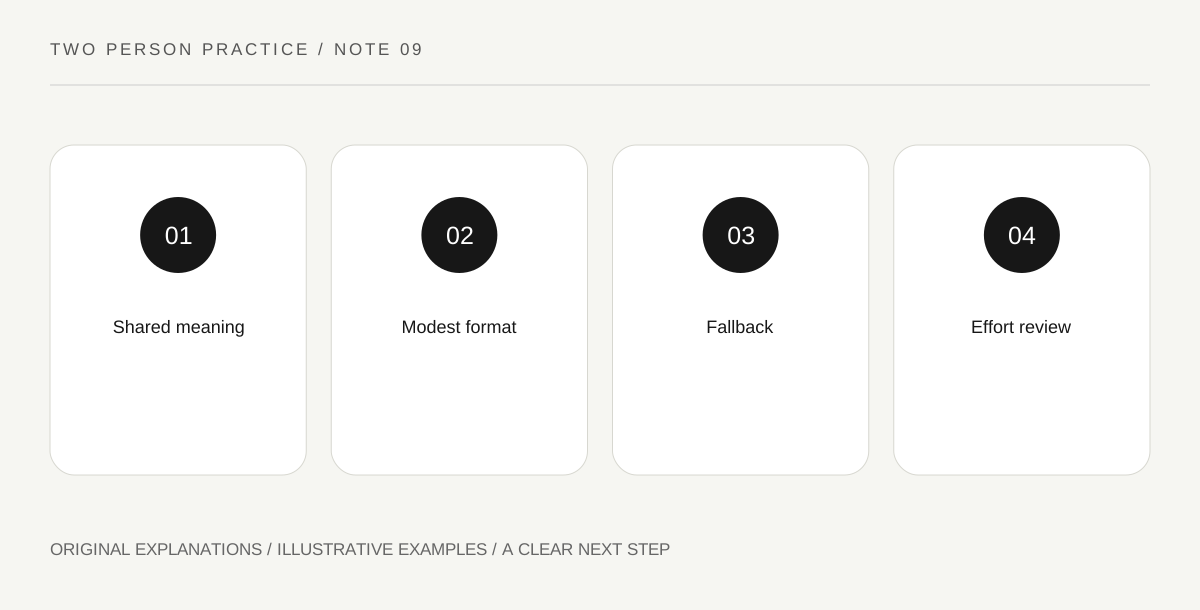
Original explanatory diagram. Read the full method and limitations below.
Choose the meaning before the format
Ask what you want the repeated moment to provide: a calm transition into the weekend, a chance to notice good moments or time for a shared interest. The answer helps distinguish a meaningful activity from a task copied because another couple does it. Each adult can describe a different hope. Look for an overlap without insisting that both experience the ritual in exactly the same emotional way.
Pick a modest repeatable form
A short Sunday breakfast or one shared song while preparing dinner can be enough if both enjoy it. State an approximate time and how much preparation it needs. Avoid choosing a form so elaborate that one person becomes its unpaid event manager. The original exercise is a practical design task, not a claim that a specific ritual duration produces a measured relationship benefit. Choose a form you can actually imagine repeating. Include preparation and cleanup when judging how modest the ritual is.
Agree what happens when it is missed
A tradition can survive a skipped week without becoming a test of commitment. Decide whether to reschedule, use a shorter version or simply return next time. The fallback should preserve the meaning rather than punish the person whose schedule changed. A five-minute check-in may fit a busy week when a long breakfast does not. Both people should remain able to say that the ritual no longer suits them and needs revision.
Review enjoyment and effort together
After several repetitions, ask what each person likes and what feels like work. Keep a part that serves the intended meaning and change a part that does not. A tradition can evolve without erasing the care that created it. Record the purpose, ordinary version and fallback in plain language. The result is a shared choice in the current relationship, rather than a permanent obligation inherited from an idealized image of how couples should behave.
Illustrative worked example
Illustrative ritual: Two adults want an unhurried start to the weekend. They try a simple Saturday breakfast with phones put aside by mutual choice. When one works early, they use a short shared drink later rather than treating the missed breakfast as rejection. After a month, they keep the relaxed conversation but simplify the food preparation because neither wants the ritual to create a large kitchen task.
Questions that come up
Must a tradition come from family history?
No. Adults can create a new repeated activity together. Existing traditions can also be adapted if both want them.
Is missing the ritual proof that it failed?
No. Review whether the format fits ordinary life. A clear fallback can preserve the purpose without demanding perfect repetition.
References and scope
These sources support the factual background. Examples and exercises are original illustrative teaching material. References do not imply endorsement.
- Gottman Institute: Make the Holidays Your Own — Shared rituals as a conversation topic; specific activities below are original examples.
- love is respect: Healthy Relationships — Mutual respect, equality and independent choice as boundaries for relationship education.