Revise a canceled plan without leaving the whole evening undefined
When one plan falls through, the next decision is often left unspoken. This exercise separates disappointment about the lost plan from the practical choice of what happens now. It allows a replacement, independent time or a pause without requiring either person to pretend the cancellation did not matter.
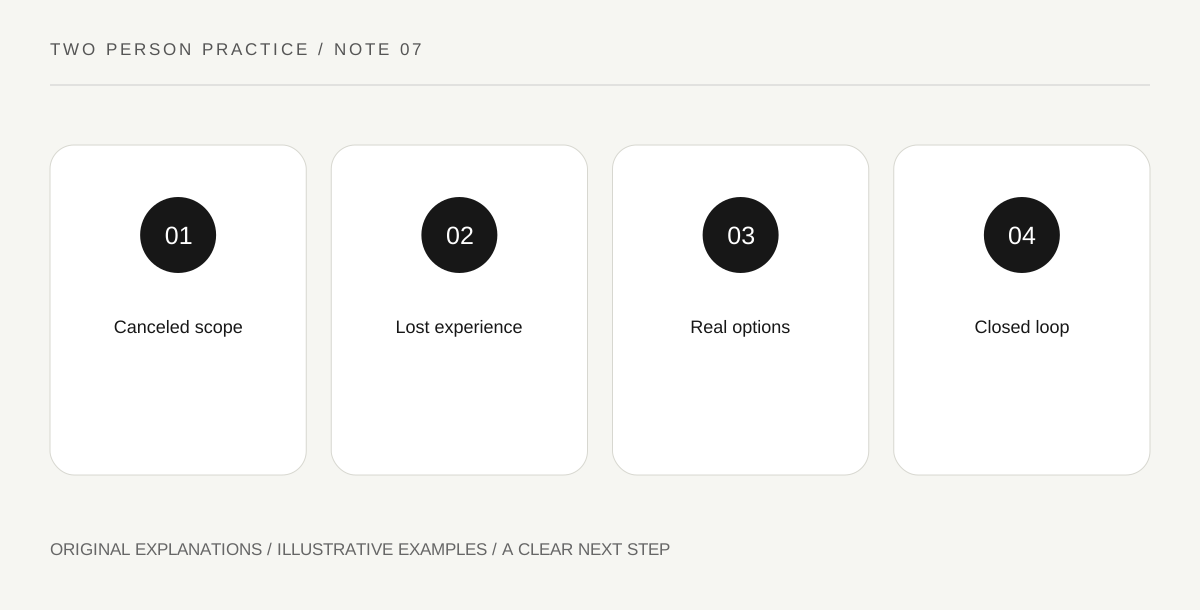
Original explanatory diagram. Read the full method and limitations below.
Name what was actually canceled
Was the restaurant booking lost, the whole outing impossible or only one person’s availability changed? Identify the scope before proposing alternatives. A closed venue does not automatically mean the entire evening together is canceled. Conversely, a tired partner may be withdrawing from the whole outing rather than asking for a different restaurant. The practical meaning matters because the right next question depends on what remains possible and wanted.
Acknowledge the lost part specifically
I was looking forward to the concert names a disappointment without turning it into you never care about plans. The other person can acknowledge that feeling even when the cancellation was outside their control. Keep the acknowledgment distinct from a demand that they immediately repair your mood. This makes room for both people to say what the plan meant before deciding whether a replacement would actually serve the same purpose.
Choose among a few real options
Ask whether you both want a smaller activity, separate time or another date. A replacement should be freely chosen, not a test of loyalty after the original plan failed. Offer options with clear practical demands. A film at home and a new outing across town are not equal in effort. If neither wants to choose immediately, agree when to return to the decision instead of leaving one person waiting indefinitely for an implied plan.
Close the practical loop
Once an option is chosen, state what happens to bookings, messages or preparations. Someone may need to cancel a reservation or tell another person. Assign that action explicitly. If the evening becomes independent time, say so rather than assuming the other adult should remain available. The exercise ends with a clear next arrangement and room for honest disappointment, rather than a forced cheerful replacement that conceals different expectations.
Illustrative worked example
Illustrative cancellation: A concert is canceled by the venue. One adult wanted the performance; the other mainly wanted time together. They acknowledge the difference and choose a short meal at home rather than rushing to find another event. They agree to look at the venue’s official refund communication separately and decide the rest of the evening is open. The replacement is a modest shared choice, not proof that the lost concert no longer matters.
Questions that come up
Should a replacement happen immediately?
Only if both want one. A pause or separate plan can be a valid response when energy or availability has changed.
What if cancellations keep happening?
Discuss the recurring practical pattern at a suitable time using specific examples. One canceled evening should not carry the entire unresolved history of the relationship.
References and scope
These sources support the factual background. Examples and exercises are original illustrative teaching material. References do not imply endorsement.
- love is respect: Healthy Relationships — Mutual respect, equality and independent choice as boundaries for relationship education.