Give shared calendar entries a clear status
A calendar can hold ideas, requests and confirmed plans, but those are not the same thing. This exercise helps two adults distinguish a possible activity from an agreement involving both people. The goal is fewer practical surprises while preserving each person’s freedom to choose.
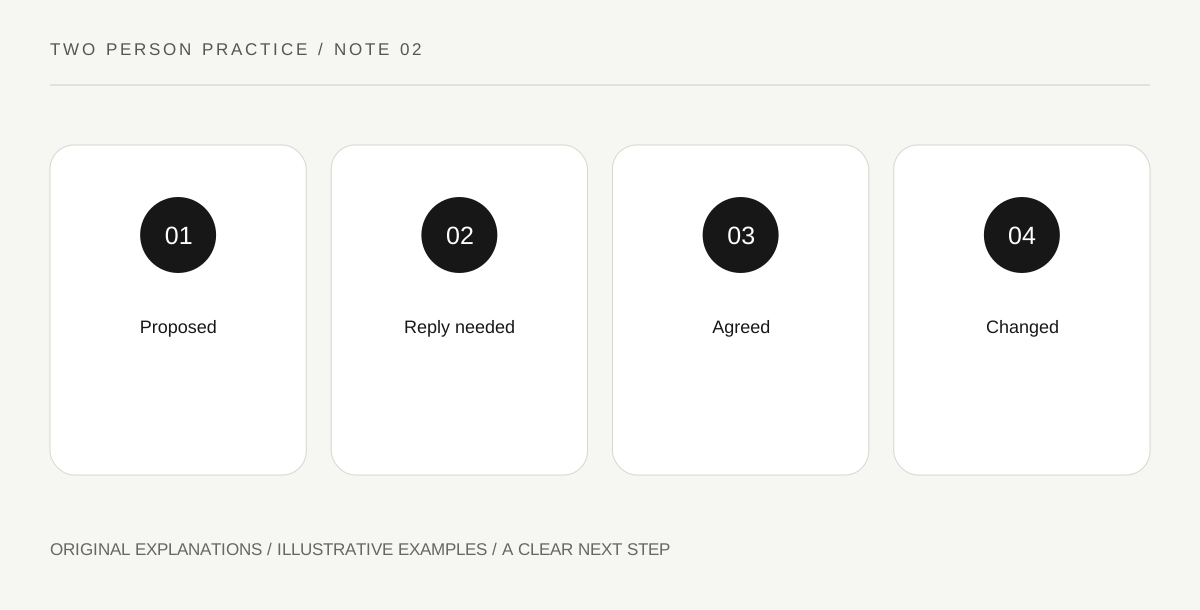
Original explanatory diagram. Read the full method and limitations below.
Identify what an entry currently means
Pick one upcoming item that concerns both of you. Ask whether each person sees it as an idea, an invitation, a tentative hold or a confirmed plan. The same title on a screen can carry different assumptions. Describe the meaning explicitly before debating who forgot. A calendar is a recording tool; it does not automatically establish that another adult agreed to an activity simply because an event appeared in a shared view.
Choose a small status vocabulary
Use labels you both understand, such as proposed, waiting for reply and agreed. You do not need a complex productivity system. A short prefix or a note can be enough. Decide who changes the status after the answer arrives. This makes the transition visible and prevents a tentative hold from lingering indefinitely as though it were a promise. Keep separate personal plans separate when they do not require shared participation.
Record the essential practical details
For an agreed plan, include the date, time, place and who is doing any necessary preparation. If the location or booking remains uncertain, say so. Do not fill the uncertainty with a guessed detail to make the calendar look complete. The entry should support the next action, such as buying tickets only after agreement, rather than become evidence that one person is entitled to control the other’s free time.
Review one real week
Compare the entries with what was actually understood. If a plan changed, note how the update was communicated and whether the other person saw it. Avoid treating a missed notification as proof of indifference before checking the practical chain. The useful review asks where the status became unclear and how to make the next entry easier to interpret. A successful calendar arrangement reduces guessing without requiring constant monitoring of each other’s movements.
Illustrative worked example
Illustrative entry: Museum Saturday begins as Proposed: museum, awaiting both replies. After both agree, it becomes Agreed: Saturday, eleven, main entrance; Sam checks ticket availability. When the booking time changes, Sam updates the entry and sends a direct note because the other person may not notice a silent edit. The example gives the event a status and owner without turning the shared calendar into permission over personal time.
Questions that come up
Does a shared calendar require sharing every personal event?
No. Agree what information serves shared logistics. A planning tool does not require surrendering privacy or recording every independent activity.
What if one person dislikes calendar apps?
Use another mutually workable method, such as a weekly note or spoken confirmation. The important feature is shared meaning, not a particular application.
References and scope
These sources support the factual background. Examples and exercises are original illustrative teaching material. References do not imply endorsement.
- Gottman Institute: Questions before moving in together — Context for explicit discussion of cohabitation routines and expectations; exercises here are original.
- love is respect: Healthy Relationships — Mutual respect, equality and independent choice as boundaries for relationship education.