Plan a weekend with one shared anchor and room around it
A weekend can become crowded when every free hour is treated as available for a joint plan. This original exercise begins with one activity both want, then leaves the surrounding time visible. The result may be a modest plan rather than a fully scheduled shared itinerary.
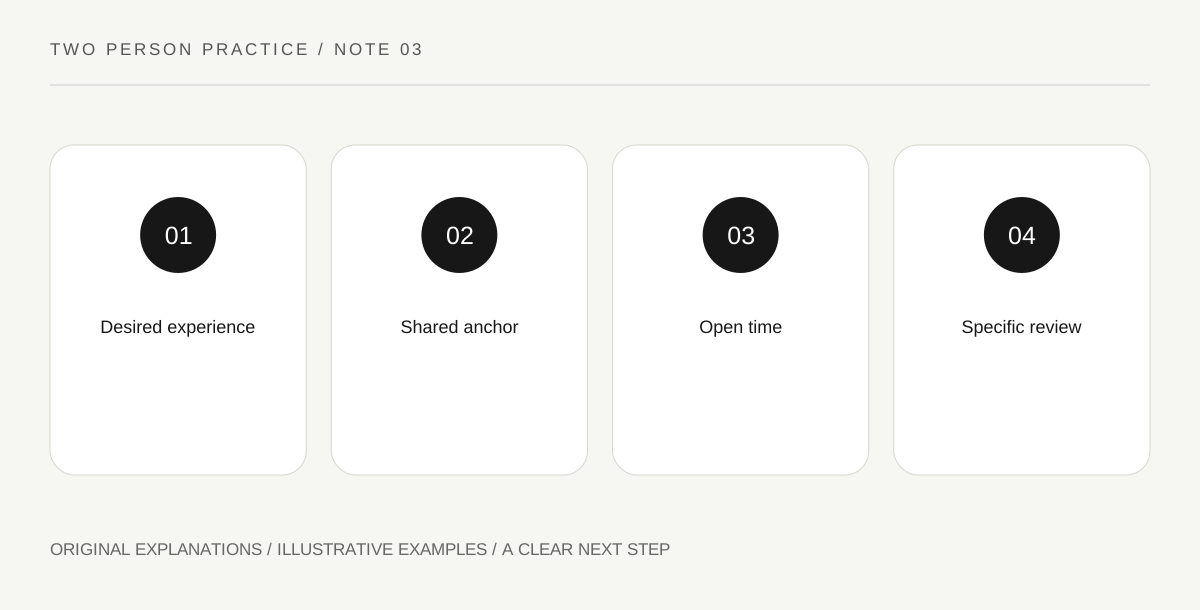
Original explanatory diagram. Read the full method and limitations below.
Name the experience each person wants
One adult may want an unhurried meal; another may want time outdoors. Ask what each hopes to feel or do, using ordinary concrete language. Avoid translating a preference into a character judgment such as you never want adventure. The purpose is to understand the desired experience before negotiating a destination. Two people can choose the same activity for different reasons, and those reasons may affect how long or intense the plan should be.
Choose one shared anchor
Pick a bounded activity with a clear approximate beginning and end. A park walk followed by lunch can be an anchor; an undefined whole day of spontaneous fun may conceal very different expectations. Both people should be able to accept, revise or decline it. Do not treat the exercise as a way to obtain reluctant agreement. If no shared anchor works this weekend, an honest independent plan remains a valid outcome.
Leave the surrounding time unclaimed
Mark travel, preparation and recovery time realistically, then identify what is still open. Open time is not automatically another invitation waiting to be filled. One person may use it for a hobby or rest. Say which parts are joint and which are undecided. This prevents a two-hour agreement from silently expanding into an entire day, while still allowing both people to propose an additional activity if they genuinely want one.
Review whether the anchor served its purpose
Afterward, ask whether the meal felt unhurried or the outdoor time was enjoyable, using the original hopes as reference points. If the plan felt rushed, revise the travel or preparation rather than assuming the activity itself was wrong. Keep the review specific and proportionate. A weekend is not a relationship examination. The worksheet simply helps distinguish shared enjoyment, logistical effort and the personal time that makes the plan workable.
Illustrative worked example
Illustrative weekend: Mira wants outdoor time, and Lee wants a relaxed conversation. They agree on a familiar park walk and lunch from ten until about one. The afternoon remains personal time rather than an implied second outing. Afterward, they note that the travel was longer than expected and choose a closer park next time. The adjustment preserves both hoped-for experiences without requiring a larger or more expensive plan.
Questions that come up
Must partners spend the whole weekend together?
No. Shared and independent time can coexist. The useful agreement is clear about what both people actually chose.
What if the two desired experiences do not fit one activity?
You can choose separate plans or different times. A single combined activity is an option, not proof that every preference must be merged.
References and scope
These sources support the factual background. Examples and exercises are original illustrative teaching material. References do not imply endorsement.
- Gottman Institute: Make the Holidays Your Own — Shared rituals as a conversation topic; specific activities below are original examples.
- love is respect: Healthy Relationships — Mutual respect, equality and independent choice as boundaries for relationship education.