Give a hobby collection a defined place in a shared home
A collection can be meaningful to one adult and visually or physically demanding in a shared room. This exercise separates the hobby’s value from the practical footprint. It helps two people discuss display, storage and future additions without treating the collector or the noncollector as the problem.
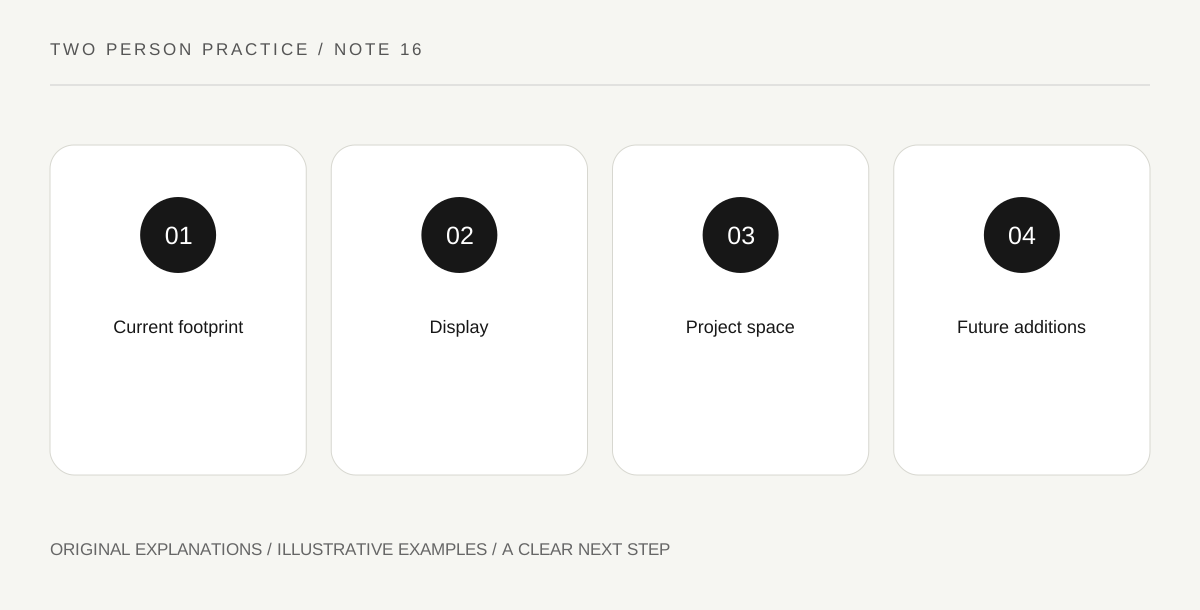
Original explanatory diagram. Read the full method and limitations below.
Describe the collection’s current footprint
Choose one area and identify what occupies it: display objects, supplies, packaging or unfinished projects. Use actual space rather than a vague claim that the hobby is everywhere. The collector can explain which parts are used and which carry meaning. The other adult can name the practical impact, such as losing a shared table. These descriptions can coexist without requiring either person to adopt the other’s taste.
Separate display from working space
A collection may need one place to be enjoyed and another for an active project. Decide which surfaces are shared, which are personal and what must be cleared after use. The arrangement should reflect the actual home rather than a fantasy of unlimited storage. Do not discard another person’s items to prove the point. Ownership and agreement remain relevant even when the current arrangement is inconvenient.
Discuss the next addition before the limit is reached
A defined space can help make growth visible, but it should not become a unilateral rule imposed after belongings are already present. Agree how a new item affects the current arrangement. Perhaps an addition replaces another display piece or requires a separate conversation about storage. The goal is a clear decision process, not a requirement that a collector justify every purchase as though the other adult were a supervisor.
Review access and enjoyment together
After trying the arrangement, ask whether the shared surface is usable and whether the collection still feels meaningfully available. A solution that hides everything important may not be workable; a solution that restores no shared access may also fail. Revise the practical boundary with both experiences visible. Record display area, project area and the process for additions separately. This keeps the hobby’s meaning distinct from the question of how a shared room functions.
Illustrative worked example
Illustrative agreement: One adult collects model kits and uses the dining table for assembly. They agree on a suitable display shelf and a project tray that can be moved appropriately before meals. New large display pieces prompt a space discussion before purchase. After two weeks, they adjust the tray’s storage location because it blocked a useful cupboard. Neither treats the revision as a judgment that the hobby is childish or that shared meals are unimportant.
Questions that come up
Must the other person enjoy the collection?
No. Respecting a hobby does not require sharing the same taste. The practical agreement concerns space and use, while the collector can retain their own interest.
Can a space limit be changed later?
Yes, by discussion. A useful boundary can adapt when the home or collection changes, rather than becoming an unspoken permanent rule.
References and scope
These sources support the factual background. Examples and exercises are original illustrative teaching material. References do not imply endorsement.
- Gottman Institute: Questions before moving in together — Context for explicit discussion of cohabitation routines and expectations; exercises here are original.
- love is respect: Healthy Relationships — Mutual respect, equality and independent choice as boundaries for relationship education.