Map family visits before dividing a holiday by habit
Holiday visits can become complicated when two adults inherit different expectations about where they will be. This exercise maps actual invitations, travel and recovery time before making a promise. It addresses this year’s practical plan without declaring one family tradition the permanent default.
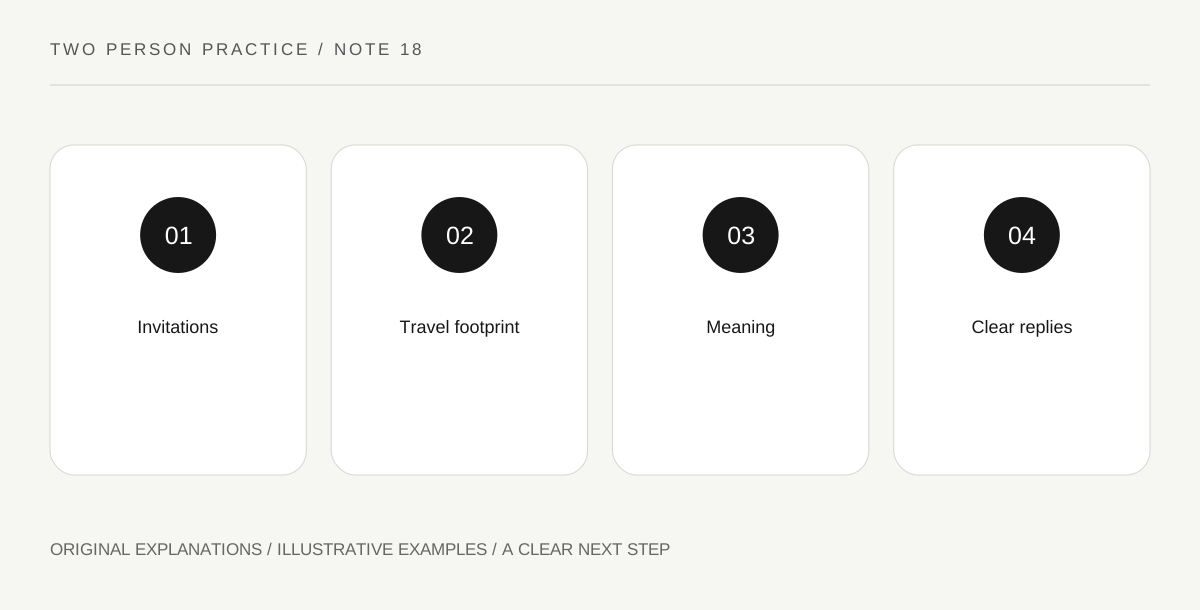
Original explanatory diagram. Read the full method and limitations below.
List invitations as invitations
Write who has invited you, the dates and what is genuinely fixed. An annual expectation is not identical to a confirmed agreement. Ask each other what you actually want before sending replies. One adult may assume the usual plan remains automatic, while the other expects a new decision. Making that distinction visible can prevent relatives from receiving incompatible promises made in separate conversations.
Include the full travel footprint
A two-hour meal may require a day of travel, preparation or an overnight stay. Map those demands honestly. Do not compare invitations only by the length of the event itself. Use current official travel information when booking, and keep uncertain times uncertain until checked. This worksheet does not recommend a route or establish a travel budget. It helps the couple see the practical time attached to each option before deciding what is manageable.
Discuss meaning alongside logistics
Ask which part matters most: seeing a particular person, sharing a meal, attending an event or having quiet time together. The answer can create alternatives that a simple equal-hours calculation misses. Different traditions can carry different meanings, but do not assign those meanings from cultural stereotypes. Let the individual explain. An arrangement can respect both families without requiring identical time at every gathering or accepting every invitation.
Reply within the actual agreement
Once both adults choose a plan, decide who communicates each response and what wording reflects it. Avoid blaming the partner as the reason for a decision you jointly made. If you cannot accept an invitation, give a clear answer rather than leaving relatives to rely on a vague maybe. Review what worked after the holiday and keep next year’s plan open. A single year’s arrangement should not silently become an irreversible rule.
Illustrative worked example
Illustrative holiday: Two invitations fall on consecutive days in distant places. The couple maps travel and realizes attending both would consume the entire break. One gathering’s most meaningful part is seeing an older relative, so they arrange a separate suitable visit and accept the other event this year. Each communicates the agreed plan to their own contacts. The example makes no claim that this division is ideal for every family.
Questions that come up
Must time be split exactly equally?
Not necessarily. Discuss what matters and what is feasible. A workable freely chosen plan may use different arrangements in different years.
What if relatives dislike the decision?
You can acknowledge disappointment while communicating the actual plan clearly. The couple should not make incompatible promises merely to postpone an uncomfortable reply.
References and scope
These sources support the factual background. Examples and exercises are original illustrative teaching material. References do not imply endorsement.
- Gottman Institute: Make the Holidays Your Own — Shared rituals as a conversation topic; specific activities below are original examples.
- love is respect: Healthy Relationships — Mutual respect, equality and independent choice as boundaries for relationship education.